

For most newcomers, renting an apartment in Valencia comes before buying. It is the low-risk way to learn the city. You get to test a neighbourhood before you commit. You also settle in while your other paperwork catches up.
The catch is that the market moves fast. It also runs on Spanish rules, documents and customs. Those can trip you up, especially if you search from abroad or in a language you do not yet speak. This guide walks you through it step by step: what you pay, what landlords ask for, the process, the clauses that matter, and the traps to avoid.
It is written for foreigners moving to Valencia. That includes remote workers, retirees, students and families. It also works whether you already hold your paperwork or are arriving cold. Read it once before you view, and you will negotiate from a position of knowledge.
Can foreigners rent in Valencia?
Yes, and without restriction. No rule stops a foreigner renting a home in Spain. You simply meet the same requirements as a local, which mostly means proving you can pay.
Your NIE (your foreigner ID and tax number) makes everything smoother. Landlords usually expect it for a long-term contract. You can often sign short-term or temporary housing on your passport alone. That is why many people book a temporary base first, then hunt for the long-term home once they arrive.
How the Valencia rental market works
Valencia is now one of Spain's most in-demand rental cities. Good flats in popular barrios can be gone within a day or two. Viewings are often group affairs, and landlords can be selective.
Rents have climbed over the past few years. More international residents and remote workers have arrived, so the old bargains are rarer, especially in the centre. Even so, Valencia stays far cheaper than Madrid or Barcelona. Most newcomers still get more space and light than they expected.
Two quirks help to know early. First, most long-term flats come furnished or semi-furnished. That is handy, but you inherit someone else's taste and an inventory you sign for. Second, timing matters. The market is tightest in September, when students arrive, and quietest in mid-winter. If you can be flexible, you will face less competition outside the autumn rush.

Choosing the right barrio is half the decision; Valencia's neighbourhoods each have their own character.
What you will pay: rent by area
Rent is your biggest cost, and it swings by neighbourhood. As a rough 2026 guide for a one-bedroom flat, the quieter barrios such as Patraix or Benimaclet start lower. The in-demand central districts, Ruzafa and l'Eixample, sit at the top. A larger three-bedroom flat outside the centre usually runs from around 1,200 to 1,700 euros.
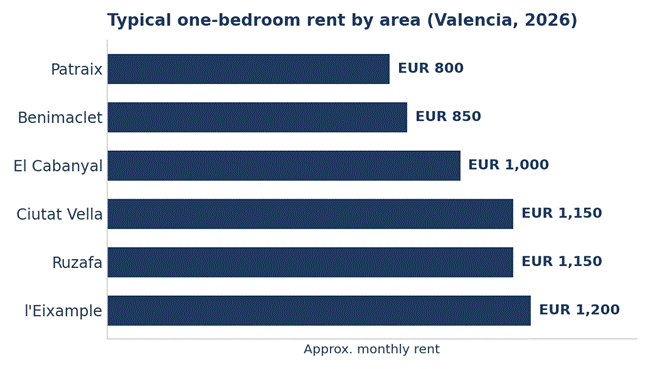
Figure 1: Indicative one-bedroom rents by area in 2026. Central barrios cost noticeably more than the quieter ones.
What you get for the money differs as much as the price. In l'Eixample or Ruzafa you pay for elegant period buildings and cafes on your doorstep. In Benimaclet or Patraix your euros buy more space and a real neighbourhood feel a short metro ride out. Compare like for like: floor area, whether the flat is exterior or interior, the floor, the lift, and the air-conditioning and heating.
The upfront cash: deposit and guarantees
Beyond the first month, budget for the deposit. Spanish law caps it, which protects you. The fianza (the legal security deposit) is capped at one month's rent. A landlord may ask for extra guarantees on top, but no more than two further months. So the deposit and guarantee together cannot legally exceed three months' rent. Anyone demanding more is breaking the law.
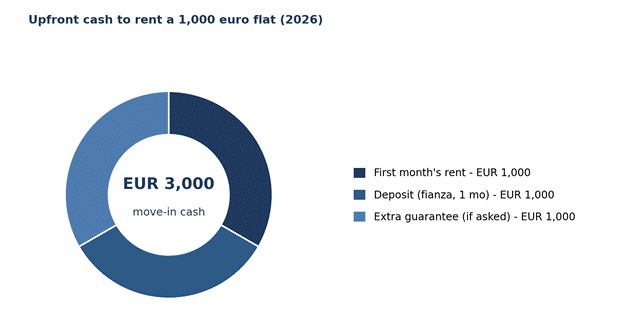
Figure 2: A realistic move-in cash example on a 1,000 euro flat. The deposit and guarantee are capped at three months' rent.
Most private landlords ask for the first month plus one month's fianza. Some add one extra month as a guarantee. The fianza is not the landlord's to spend. In the Valencian Community it is lodged with the regional housing authority. You get it back at the end, minus only genuine damage beyond normal wear.
Typical monthly running costs on top of rent
Rent is not the whole story. Budget for the running costs that come with the flat. For a typical one or two-bedroom apartment, utilities and essentials add roughly 150 to 200 euros a month. High-summer air-conditioning or winter heating pushes that higher.
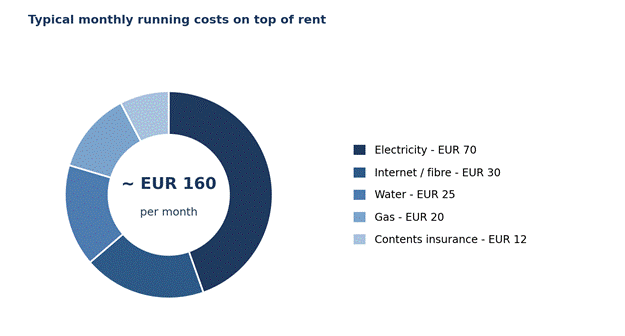
Figure 3: A typical monthly running-costs example on top of rent. Electricity is the swing factor.
A few of these deserve a note. Electricity is the biggest bill and the biggest variable, so ask what the flat uses for heating and cooling. The community fees (the comunidad) and the annual property tax (IBI) almost always sit with the landlord on a long-term let. Check that the contract does not try to pass them to you. Contents insurance for your own belongings is cheap and worth having.
The documents landlords ask for
Landlords want reassurance that the rent arrives on time. So arrive with a tidy file, ready to send the moment you like a flat. You will usually be asked for:
- Identification: your passport and, for a long-term contract, your NIE.
- Proof of income: a work contract or recent payslips. Aim to show net income of around three times the rent. Pension or savings evidence works if you do not yet have a Spanish job.
- Bank statements: usually the last three months, to show stability.
- A reference: a letter from your employer or a previous landlord reassures a cautious owner.
- A guarantee where needed: a landlord may ask for a Spanish guarantor (aval), a few months up front within the legal limit, or a rental-default insurance policy.
Freelancers and remote workers should also bring a recent tax return. A clear file wins flats when you are one of several applicants. It also lets you move fast when the right place appears.
The rental process, step by step
From first search to keys in hand, a Valencia rental follows the same path. Knowing the order helps you move at the market's speed.
- Set up your search and alerts. List on the big portals and turn on instant alerts.
- Shortlist and view quickly. Reply fast and see places in person; photos flatter and hide noise, light and condition.
- Make an offer and reserve. When you find it, say so at once. Pay a reservation only against a written document.
- Provide your documents. Send your file so the landlord can run checks.
- Review and sign the contract. Read every clause, query anything unclear, and sign only what you understand.
- Do the inventory and photos. Note existing marks in writing and take dated photos. This protects your deposit.
- Pay and lodge the deposit. Pay the first month and fianza traceably; the fianza is lodged with the regional authority.
- Set up utilities and register. Put the services in your name and register on the padron at your new address.
Long-term or seasonal? The contract that shapes your rights
The contract you sign sets your rights and your costs. A long-term residential contract, for your main home, falls under the Ley de Arrendamientos Urbanos (the LAU). It gives you strong security. Even a one-year contract lets you stay and renew for up to five years with a private landlord, or seven years with a company. This is the contract you want for a permanent move.
A seasonal or temporary contract (arrendamiento de temporada) covers a defined, shorter stay. Think studying, a work posting or a relocation. It does not carry the same long-term protections, and rents can be higher. Renting a room is a third, more informal route for students and short stays. A tourist flat is not a home; under Valencia's 2026 rules it cannot legally be your residence.
The contract type also decides the agency fee. On a long-term rental the landlord generally pays the agency fee, though the tenant usually pays an administrative fee. On a seasonal contract, the tenant pays the agency fee. Still weighing renting against buying? Our guide to the real cost of buying a house in Spain lays out the ownership numbers.
Contract clauses to check before you sign
Spanish leases are generally fair. Even so, read yours carefully, ideally with someone who reads Spanish. Confirm these points in writing:
- Duration and renewal: the initial term and your right to renew up to five (or seven) years.
- Rent and increases: the monthly figure, and that rises track the official index rather than being left open.
- Deposit amount and return: one month's fianza, any guarantee within the cap, and clear return terms.
- Who pays what: confirm the landlord carries the comunidad and the IBI, and that you cover only your utilities.
- Break clause and notice: your right to leave after six months with 30 days' notice, and any penalty the contract adds.
- Inventory and condition: a signed inventory for a furnished flat, plus the condition on arrival.
- Works, decor and pets: what you may change or hang, and whether pets are allowed.
- The energy certificate: by law the landlord attaches a copy of the property's energy performance certificate.
What the landlord must provide
Renting is a two-way street. Spanish law places real duties on the owner. Before letting a home, a landlord must hold a valid energy performance certificate (the CEE) and attach a copy to your contract. Letting without one risks a fine. The home must also be genuinely habitable, which usually means holding a habitation certificate (cedula de habitabilidad).
Beyond the paperwork, the owner keeps the home fit to live in and covers major repairs. Think structure, plumbing, heating or appliances that fail through normal use. You cover small day-to-day upkeep. If something significant breaks, report it in writing straight away. The duty to fix it sits with the owner.
Who pays what: tenant versus landlord
This is a frequent source of confusion. Here is the usual split on a long-term residential let in Valencia:
| Cost | Usually the tenant | Usually the landlord |
| Monthly rent | Yes | |
| Utilities (electricity, water, gas, internet) | Yes | |
| Community fees (comunidad) | Yes | |
| Property tax (IBI) | Yes | |
| Building insurance | Yes | |
| Contents insurance (your belongings) | Yes | |
| Agency fee (long-term) | Admin fee only | Commission |
| Major repairs / structure | Yes | |
| Small day-to-day upkeep | Yes |
Setting up utilities and internet
Once the flat is yours, sort the services quickly so nothing lapses. If the previous tenant's contracts are still live, you usually just change the account holder and the direct debit into your name. For an empty flat you set up fresh contracts. Iberdrola, Endesa and Naturgy supply electricity and gas, and you can shop the free market for a better tariff. A local company handles water. Movistar, Orange, Digi, Vodafone and O2 all offer fast fibre, though installation can take a week or two.
Two practical tips. Set everything to direct debit (domiciliacion) from your Spanish account, so payments never lapse. And make sure the account details match your name and NIE, because utility bills double as proof of address.
Insurance, the padron and the move-in
A few finishing steps turn a rental into a home. Take out cheap contents insurance for your belongings and personal liability. Then register on the padron (empadronamiento) at your new address. You want it anyway for healthcare and school places, and our first-month checklist for moving to Valencia sets out the order. Update your address with the bank, and keep your signed contract, inventory and move-in photos safe.
Your rights as a tenant
Spanish law leans towards tenants. Knowing your rights saves stress and money:
- Security of tenure: up to five years with a private landlord, seven with a company, even on a one-year contract. The landlord cannot simply ask you to leave after year one.
- Capped rent increases: for contracts signed after May 2023, an official index (the IRAV) limits annual rises. It stands at 2.14% as of January 2026.
- Freedom to leave: you can move out after the first six months, with 30 days' written notice.
- Quiet enjoyment: the landlord cannot enter without your permission or turn up unannounced.
- Repairs: the owner keeps the property habitable and pays for major repairs.
- Your deposit back: the fianza returns to you at the end, less only genuine damage beyond normal wear.
Where to search, and how to move fast
Most listings sit on the big portals, Idealista and Fotocasa, plus local and expat agencies. Good flats go quickly, so set up alerts, reply within minutes, and keep your file ready. Being organised genuinely wins flats here. Prefer not to do this from a distance or in Spanish? Our rental team can shortlist, view and negotiate for you, and line up a home before you land as part of a relocation package.
Red flags and rental scams
A few simple rules keep you safe. Never pay anything before you have viewed the property and seen a written contract. Be wary of a landlord who is conveniently abroad and wants a wire transfer for keys they will post. Watch for prices well below the market, and for pressure to decide on the spot. Always insist on a written contract in your name. Confirm the person is the owner or a registered agent. Pay by bank transfer, never in cash without a receipt. If a deal feels off, walk away.
A quick glossary of Spanish rental terms
| Term | What it means |
| Fianza | The legal security deposit, capped at one month's rent, lodged with the regional authority |
| Aval | A guarantor or financial guarantee a landlord may ask for |
| LAU | Ley de Arrendamientos Urbanos, the tenancy law that sets your rights |
| IRAV | The official index that caps annual rent increases |
| Comunidad | Community fees for the building's shared areas (usually the landlord's cost) |
| IBI | The annual council property tax (usually the landlord's cost) |
| CEE | Energy performance certificate the landlord must provide |
| Cedula de habitabilidad | Habitation certificate confirming the home is fit to live in |
| Arrendador / Arrendatario | Landlord / tenant |
| Temporada | A seasonal or temporary contract for a defined shorter stay |
Frequently asked questions
Do I need a NIE to rent in Valencia?
For a long-term contract, almost always. Short-term or temporary housing you can usually sign on your passport. That is why arranging temporary housing first is so useful while you get your NIE.
How much deposit is normal?
One month's fianza is standard, sometimes with one extra month as a guarantee. By law the deposit and any guarantee cannot exceed three months' rent.
How long is a rental contract in Valencia?
Long-term contracts often run for one year but renew automatically. Under the LAU you can stay up to five years with a private landlord, or seven with a company.
Can the landlord raise my rent whenever they want?
No. For contracts signed after May 2023, the IRAV index caps annual increases (2.14% as of January 2026). So rises stay limited and predictable.
Are flats in Valencia furnished?
Most long-term flats come furnished or semi-furnished. Always sign an inventory so responsibility for the contents is clear.
Can I leave before the contract ends?
Yes. After the first six months you can leave with 30 days' written notice. Check whether your contract adds a proportional penalty.
What if the landlord will not return my deposit?
The fianza must come back, less only genuine damage beyond normal wear. Your signed inventory and move-in photos are your evidence, and you can pursue an unfair withholding.
Can Homevested help me find a rental?
Yes. Our rental and relocation team can search, view, negotiate and handle the contract, and match you to the right neighbourhood for your budget.
Ready to find your Valencia home?
Renting well comes down to preparation and speed, and it is easier with a local on your side. Tell us your budget, timing and must-haves. We will line up the right options and handle the paperwork. Contact us or browse our properties for rent to start.