

The cost of living in Valencia is one of the biggest reasons Northern Europeans keep moving south. The sunshine gets people to book the flight; the maths convinces them to stay. In 2026, funding the same lifestyle costs roughly a third more in Berlin, around 40 percent more in Munich, and close to double in Amsterdam or London.
This guide breaks down what daily life actually costs in Valencia in 2026, from rent and groceries to eating out, utilities, transport and healthcare, and sets each against Northern European cities so you can see exactly where your money goes further. The figures are 2026 estimates from public cost-of-living trackers such as Numbeo and Expatistan, plus local market knowledge; treat them as a realistic planning guide, not a quote.
How much cheaper is Valencia, really?
The honest headline: a lot. On a like-for-like basis, renting in both places, international cost-of-living indices in 2026 put Berlin about 33 percent more expensive than Valencia, Munich about 39 percent more, Amsterdam around 80 percent more, and London roughly 95 percent more. In practice, a comfortable 2,000 euro a month lifestyle in Valencia would cost close to 2,700 euros in Berlin, around 3,600 euros in Amsterdam and near 3,900 euros in London.
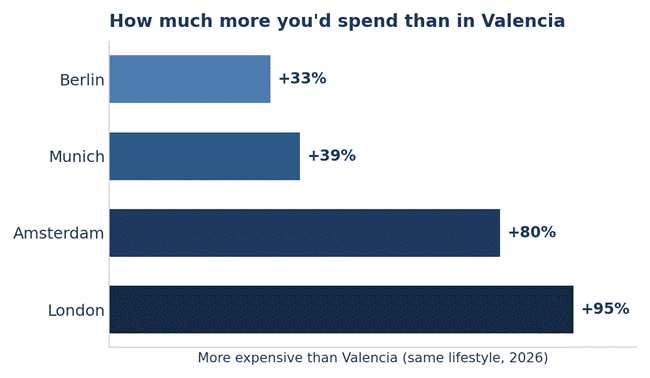
Figure 1: How much more it costs to fund the same lifestyle in four Northern European cities, versus Valencia (2026).
Two things drive that gap: housing and services. Rent, eating out, coffee and public transport are dramatically cheaper in Valencia, while a handful of imported or big-ticket items cost much the same everywhere. Let us go category by category.
Rent: where the biggest saving lives
Housing is the largest line in almost anyone's budget, and it is where Valencia's advantage is widest. In 2026, a one-bedroom flat in a central, sought-after barrio like Ruzafa or l'Eixample runs roughly 900 to 1,300 euros a month, while the same size in a quieter neighbourhood such as Benimaclet or Patraix can start near 700 euros. A three-bedroom family flat outside the very centre typically sits around 1,200 to 1,700 euros. Our guide to the best areas to live in Valencia breaks the neighbourhoods down by budget and lifestyle.

Rent is where the gap is widest: a central one-bedroom in Valencia costs roughly half what it does in Amsterdam.
Compare that with Amsterdam, where a central one-bedroom comfortably exceeds 1,800 to 2,000 euros, or London, where it is higher still. Even Berlin and Munich, cheaper than Amsterdam, sit well above Valencia for the same space. If you are moving from the Randstad, halving your rent while gaining light, space and a balcony is a realistic outcome.
- One-bed, central (Ruzafa, Eixample): about 900 to 1,300 euros
- One-bed, quieter barrio (Benimaclet, Patraix): from about 700 euros
- Three-bed family flat, outside the centre: about 1,200 to 1,700 euros
- Deposit: usually one month (the fianza), sometimes two
Groceries and everyday food
Spain has some of the lowest food prices in Western Europe, and Valencia is no exception. A single person who shops mainly at Mercadona and tops up at a local market spends about 250 to 350 euros a month; a couple, 350 to 450 euros. The Mediterranean diet is cheap here almost by accident: local fruit and vegetables, olive oil by the litre, fresh fish, and drinkable Spanish wine at 3 to 5 euros a bottle. Cost-of-living data in 2026 puts groceries in Amsterdam around 50 percent higher than in Valencia.
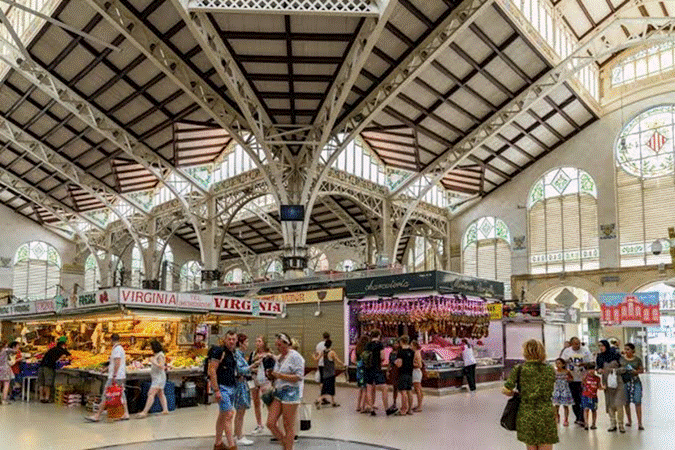
Valencia's Mercado Central, where fresh local produce keeps weekly food bills low.
Eating out, coffee and a cana
This is where the lifestyle difference becomes obvious. A weekday menu del dia, three courses with bread and a drink, is typically 12 to 15 euros. A coffee is 1.50 to 2 euros, and a small draught beer 2 to 3 euros. Restaurant prices in Amsterdam run around 60 percent higher than in Valencia, which is why newcomers find they can eat out several times a week here for what a couple of dinners cost back home.
Utilities and internet
Utilities are moderate. Electricity, water and gas for a typical flat come to roughly 80 to 130 euros a month, varying mainly with air-conditioning use in high summer. Fast fibre internet is inexpensive and widely available at around 30 euros a month. One genuine saving versus Northern Europe: Valencia's mild winters mean heating bills are a fraction of what you would pay in the Netherlands or Germany.
Getting around: one of Europe's transport bargains
Valencia is flat, compact and built for walking and cycling, so many residents spend almost nothing on transport. When you do use it, public transport is remarkably cheap: a monthly pass covering metro and bus is around 35 euros, and heavily discounted for under-30s and over-65s. There is an extensive bike-lane network and a public hire scheme (Valenbisi) for a small annual fee. Set that against a London travelcard or Dutch public-transport costs and the difference is stark.
Healthcare: mostly free, and a real budget saver
For residents in the public system, Spanish healthcare is largely free at the point of use, funded through taxes and social security rather than billed per visit. If you are employed and paying social security, you and your family are covered; if not, private health insurance is modest at roughly 50 to 150 euros a month. Either way, healthcare rarely becomes the large, unpredictable expense it can be elsewhere. We cover the details in our guide to moving to Valencia.
A realistic monthly budget for Valencia (2026)
Pulling it together, here is what a comfortable but sensible budget looks like for a single person and for a couple. Costs vary by neighbourhood and lifestyle, but these mid-range figures reflect 2026 prices.
| Category | Single (per month) | Couple (per month) |
| Rent (one-bed / two-bed) | EUR 1,000 | EUR 1,300 |
| Groceries | EUR 300 | EUR 430 |
| Utilities and internet | EUR 110 | EUR 140 |
| Transport (passes) | EUR 40 | EUR 80 |
| Leisure and eating out | EUR 300 | EUR 500 |
| Other (phone, misc.) | EUR 150 | EUR 250 |
| Approx. total | ~ EUR 1,900 | ~ EUR 2,700 |
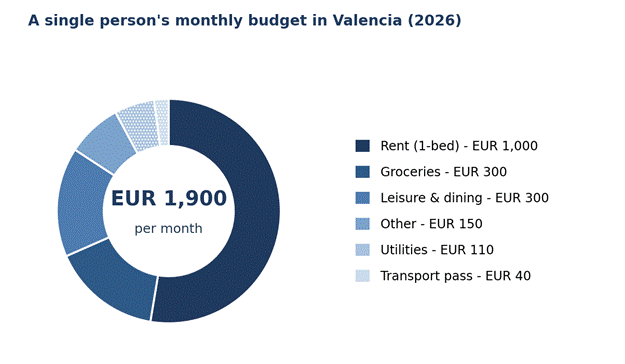
Figure 2: A mid-range single-person monthly budget in Valencia, around 1,900 euros all-in.
That lands a single person comfortably in the 1,400 to 2,200 euro range most residents report, and a couple around 2,400 to 3,000 euros, figures that would barely cover rent alone in central Amsterdam or London.
What is not cheaper in Valencia
Honesty matters, so a few caveats. Salaries in Spain are lower than in Northern Europe, so locals' purchasing power is tighter than the raw prices suggest; this comparison is most relevant if you keep a Northern European income, pension or remote salary. Rents have risen sharply in the popular barrios over the last few years, narrowing the gap in prime areas, though not in the quieter ones. And some imported goods, electronics and international-brand items cost much the same as anywhere in the EU. Valencia's advantage is overwhelmingly in housing, food, services and lifestyle, exactly the things you pay for every single day.
Frequently asked questions
Is Valencia cheaper than Amsterdam?
Significantly. In 2026, cost-of-living indices suggest you would need roughly 80 percent more money in Amsterdam to fund the same lifestyle, driven mainly by much higher rent, groceries and dining.
How much does a single person need to live in Valencia?
A comfortable single-person budget is about 1,400 to 2,200 euros a month all-in, depending on your neighbourhood and how often you eat out. Around 1,900 euros buys a very good standard of living.
Is public transport really that cheap?
Yes. A monthly metro-and-bus pass is around 35 euros, with big discounts for younger and older residents, and the city is compact enough that many people walk or cycle most days.
Will my Northern European salary go further in Valencia?
Almost always, yes, especially if you work remotely or receive a pension. Your housing and daily costs drop while your income stays the same, which is exactly why so many make the move.
Can Homevested help me find an affordable home?
Yes. Our relocation and rental teams match your budget to the right neighbourhood and handle the search, viewings and paperwork.
Make your money go further in Valencia
Lower costs, more sunshine and a slower pace: it is a hard combination to argue with. If you would like help turning the numbers into a plan, finding the right barrio for your budget and getting settled, tell us what you are working with and we will map it out. Contact us or explore our relocation services to get started.